Washington DC
Home Repair Programs for Veterans
How veterans can fund home repairs and accessibility: VA adaptation grants, nonprofit repair programs, weatherization and local DC help.
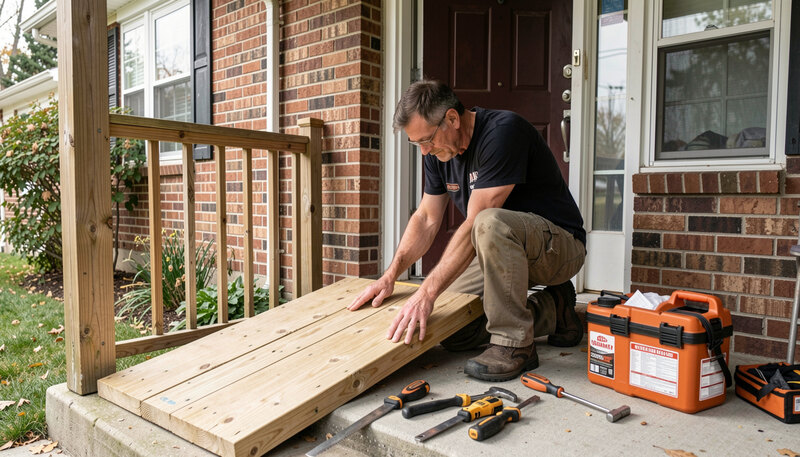
Veterans facing home repairs and accessibility needs have a specific set of programs to draw on: adaptation grants from the Department of Veterans Affairs, nonprofit repair networks, weatherization assistance and local District programs. Each has its own eligibility rules, paperwork and pace. This guide lists what exists, who qualifies, what the money can pay for, and how to sequence an application, with the Washington DC options that surround the federal ones.
Why does home repair matter for veterans?
A large share of veterans are older homeowners living on fixed incomes, and the housing stock they hold ages with them. Roofs, furnaces, wiring and plumbing fail on schedules that do not consult pension dates. Service connected disabilities add another layer: entrances, bathrooms and doorways need redesign for wheelchairs, walkers or prosthetics. Deferred repair turns into unsafe housing, then into injury or institutionalization. Repair programs exist because a modest grant that keeps a veteran safe at home costs a fraction of a fall, an evacuation or a nursing placement.
What does the VA itself pay for?
The Department of Veterans Affairs runs three housing grant programs, described at the official page for disability housing grants. The Specially Adapted Housing grant helps seriously disabled veterans buy, build or modify a home, with substantial dollar limits toward features such as widened doorways, roll in showers and ramps. The Special Home Adaptation grant serves veterans with different qualifying disabilities and funds a smaller scope of changes, such as ramps and door hardware. The Home Improvements and Structural Alterations benefit, HISA, covers medically necessary alterations for veterans with service connected conditions, and in smaller amounts for others. Eligibility for each turns on a rated disability, which makes the compensation rating the document everything else hangs from.
Who else repairs homes at no cost?
Two national nonprofit networks do most of the volunteer repair work. Rebuilding Together, through its affiliates, organizes repair days and critical home repairs for low income homeowners, veterans prominently among those served. Habitat for Humanity affiliates run home preservation programs, minor repairs and accessibility work outside their better known construction model. Both networks screen by income and ownership, and both report long waiting lists in most cities, so early application matters. Local coalitions of trades, churches and veterans organizations run single day repair events, often announced through county veterans service offices.
What is weatherization?
The federal Weatherization Assistance Program, delivered through states and the District, pays for energy saving repairs: insulation, air sealing, furnace replacement and safety checks on combustion appliances. Households receiving certain benefits, including veterans pension, often qualify automatically. The work overlaps with health and safety repair, since a heating system that fails in January is both an energy and a habitability problem. Weatherization agencies refer cases beyond their scope to repair nonprofits, and the reverse, so a single application usually triggers a wider inspection.
What about veterans at risk of homelessness?
Repair interacts with homelessness prevention. A veteran one failed furnace away from losing housing can sometimes be kept in place by a grant faster than by any rehousing program. The Department of Veterans Affairs runs grant programs for organizations supporting very low income veteran households, and the HUD VASH voucher program pairs housing choice vouchers with case management for homeless veterans; the service attached to that housing is explained in what supportive housing is. For veterans who already hold vouchers or subsidized units, repair and modification requests route through the property owner and the public housing agency, with the adaptation grants above available regardless of tenure.
What does Washington DC add?
DC residents can combine federal help with local programs. The housing department runs home repair assistance for income qualified owners, covering systems, roofs and code violations, with priority tracks for seniors and for veterans; the current rules sit with the programs described in the guide to DC affordable housing programs. The District's weatherization intake and its emergency assistance for utility and heating failures are separate doors into overlapping help. Local veterans service organizations maintain the lists of what is open this quarter, which is the practical question, since program windows open and close with budgets.
How should a veteran sequence the paperwork?
A practical order keeps the process from stalling. First, obtain or update the disability rating letter, because the largest grants key off it. Second, apply for the VA adaptation benefits that match the rating, using the official forms for each grant. Third, place applications with the nonprofit repair networks and the local weatherization agency in parallel, since waiting lists run independently. Fourth, document ownership and income early: deed, property tax record, benefit award letters. Fifth, for District residents, file with the local repair programs and ask the county veterans service officer to review the file before submission. A complete file moves; an incomplete one waits.
Where does this sit in the wider housing picture?
Home repair is the maintenance end of a housing system whose larger pieces are described elsewhere in this publication: how affordable housing is defined in what affordable housing is, how the nonprofit projects holding these homes are financed in how nonprofit housing projects are financed, and the community development tradition that ties them together, starting with what community development means.